
SpaceX Explores Splitting Banking Roles, Echoing Alibaba’s Model
3 Mins Read
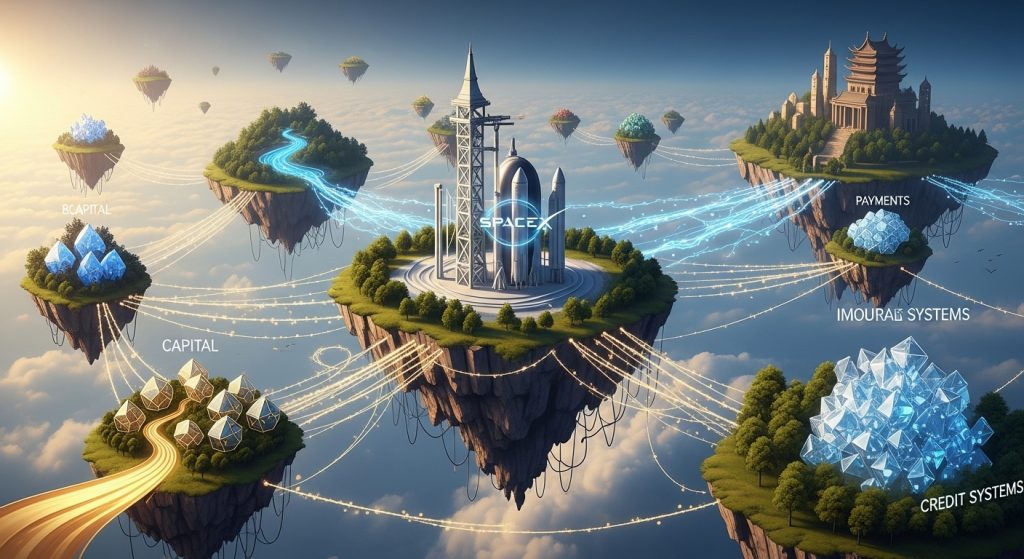
SpaceX is reportedly exploring changes to how it manages its banking relationships — and the approach resembles a model pioneered by Alibaba.
According to The Information, SpaceX has discussed dividing responsibilities among multiple banks rather than relying on a single primary institution. The strategy reflects a broader shift among large tech companies: treating financial infrastructure as something to optimize, not just outsource.
What SpaceX Is Considering
SpaceX is said to be evaluating a structure where different banks handle different functions, such as:
- Lending and credit facilities
- Cash management
- Payments and treasury operations
- Capital markets activities
Instead of one bank managing all financial services, responsibilities would be distributed.
This approach can reduce dependency and allow companies to choose specialized partners for specific needs.
The Alibaba Playbook
The strategy reportedly mirrors how Alibaba structured its banking relationships.
Alibaba historically worked with multiple financial institutions, assigning them distinct roles based on capability and geography.
This allowed the company to:
- optimize costs
- improve flexibility
- reduce counterparty risk
- maintain negotiating leverage
For large, fast-growing companies, financial infrastructure becomes complex enough to require this kind of modular approach.
Why This Matters
1. Reducing Financial Dependency
Relying on a single bank can create risk, especially for companies operating at scale.
By distributing responsibilities, companies can:
- avoid single points of failure
- maintain operational continuity
- switch providers more easily if needed
2. Optimizing for Specialization
Different banks excel in different areas.
Some may be stronger in:
- global payments
- debt financing
- capital markets
- international operations
Splitting roles allows companies to match services with expertise.
3. Strategic Control Over Finance
Large technology companies increasingly treat finance as part of their core infrastructure strategy.
This includes:
- treasury optimization
- liquidity management
- capital efficiency
- global financial operations
In this context, banking relationships become a strategic lever rather than a back-office function.
The Bigger Trend: Financial Infrastructure as a Stack
The move reflects a broader shift in how companies think about financial services.
Instead of monolithic relationships, finance is becoming more like a modular stack, similar to software architecture.
Companies are:
- unbundling services
- selecting best-in-class providers
- integrating multiple financial systems
This approach aligns with trends in fintech and embedded finance.
Challenges to Consider
While the model offers flexibility, it also introduces complexity:
- coordinating multiple banking partners
- managing compliance across institutions
- integrating financial data systems
- maintaining operational consistency
Large organizations may have the resources to handle this complexity, but smaller companies may not.
What’s Next?
If SpaceX moves forward, it could:
- formalize multi-bank structures
- expand financial partnerships globally
- influence other large tech companies to adopt similar models
The approach may become more common as companies scale and their financial needs diversify.
Conclusion: Finance Becomes Strategic Infrastructure
SpaceX’s reported exploration of a multi-bank model highlights a broader shift in corporate strategy.
Finance is no longer just a support function. It is becoming a core part of how companies operate, scale, and manage risk.
As companies grow more complex, they are likely to treat financial infrastructure with the same level of optimization and control as their technology stacks.
Key Takeaways
- SpaceX is reportedly considering splitting banking roles across multiple institutions.
- The approach mirrors Alibaba’s multi-bank strategy.
- The model reduces dependency and allows specialization.
- Financial infrastructure is becoming more modular and strategic.
- The trend reflects broader changes in how large companies manage finance.