
Chinese Startup Gestalta Is Building a Brain-Computer Interface Without Implants
3 Mins Read
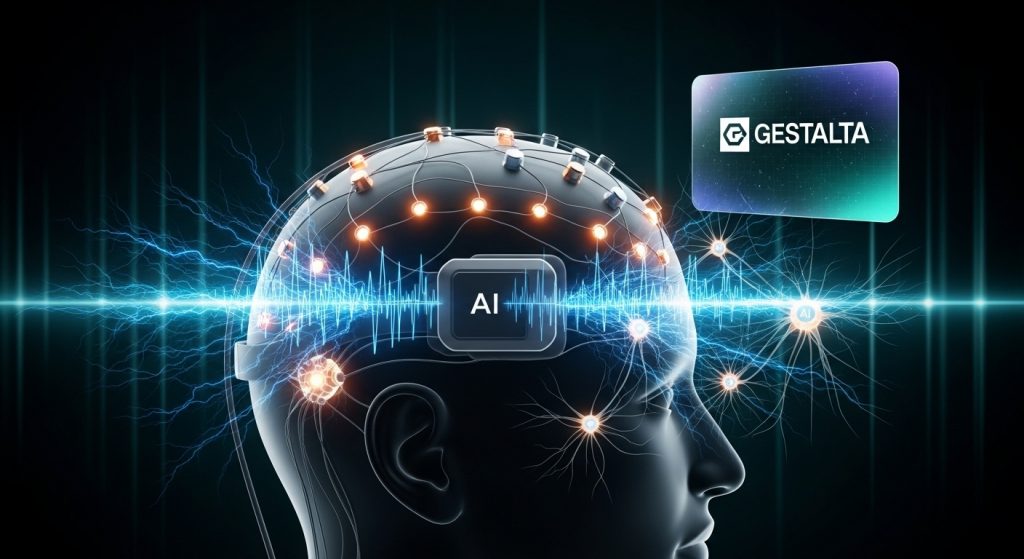
Brain-computer interfaces (BCIs) have typically required invasive procedures — implants placed directly into the brain.
But a Chinese startup, Gestalta, is taking a different approach.
According to Wired, the company is developing a non-invasive brain-computer interface, aiming to read and interpret brain signals without the need for surgery. If successful, this could make BCIs more accessible, scalable, and practical for everyday use.
What Gestalta Is Building
Gestalta is working on a system that captures brain activity externally, likely using advanced sensors placed on or near the scalp.
The goal is to:
- interpret neural signals
- translate them into commands
- enable interaction with devices
Unlike implant-based systems, this approach avoids:
- surgical risks
- long recovery times
- regulatory complexity tied to invasive procedures
This could open the door to broader adoption.
How Non-Invasive BCIs Work
Non-invasive BCIs typically rely on technologies such as:
- EEG (electroencephalography)
- advanced signal processing
- AI-based pattern recognition
These systems detect electrical activity generated by the brain and attempt to decode it into meaningful outputs.
However, the challenge has always been signal quality.
Compared to implants, external sensors:
- capture weaker signals
- are more susceptible to noise
- offer lower resolution
This is where AI plays a critical role.
The Role of AI in Making This Possible
Modern AI models can:
- filter noisy signals
- detect patterns in brain activity
- improve interpretation accuracy over time
By combining hardware with machine learning, companies like Gestalta are attempting to close the gap between invasive and non-invasive systems.
The idea is not just to read brain signals — but to understand intent.
Why This Matters
1. Accessibility
Removing the need for surgery could make BCIs available to a much larger population.
2. Lower Risk
Non-invasive systems avoid medical complications associated with implants.
3. Faster Adoption
Devices could potentially be used in everyday environments without clinical procedures.
Potential Use Cases
If the technology improves, applications could include:
- assistive tools for people with disabilities
- hands-free device control
- gaming and immersive experiences
- productivity and human-computer interaction
- rehabilitation and therapy
The long-term vision is direct interaction between the brain and digital systems.
The Competitive Landscape
The BCI space includes a range of approaches:
- invasive implants (e.g., Neuralink-style systems)
- semi-invasive techniques
- non-invasive wearable devices
Each approach trades off:
- signal quality
- safety
- complexity
- scalability
Gestalta is betting that non-invasive systems can reach a level of performance that makes them commercially viable.
Challenges Ahead
Despite the promise, major hurdles remain:
- improving signal accuracy
- reducing noise interference
- achieving reliable real-time performance
- ensuring user comfort and usability
- gaining regulatory approval
Non-invasive BCIs have historically struggled to match the precision of implanted systems.
What’s Next?
Future progress will likely focus on:
- better sensor technology
- improved AI-driven signal decoding
- real-world testing and validation
- partnerships with healthcare and tech companies
If Gestalta can demonstrate consistent performance, it could accelerate interest in non-invasive brain interfaces.
Conclusion: A More Practical Path to Brain Interfaces?
Gestalta’s approach reflects a broader shift in the BCI field.
Instead of pushing only toward higher performance through invasive methods, some companies are focusing on usability and accessibility.
The question is whether non-invasive systems can become accurate enough to compete.
If they can, brain-computer interfaces may move from experimental labs into everyday life much faster than expected.
Key Takeaways
- Gestalta is developing a non-invasive brain-computer interface.
- The system aims to interpret brain signals without implants.
- AI is critical for decoding noisy neural data.
- Non-invasive BCIs offer greater accessibility and lower risk.
- Performance and accuracy remain key challenges.