
OpenAI Secures 100MW Data Center Capacity From Tata in India, Targets 1GW Expansion
3 Mins Read
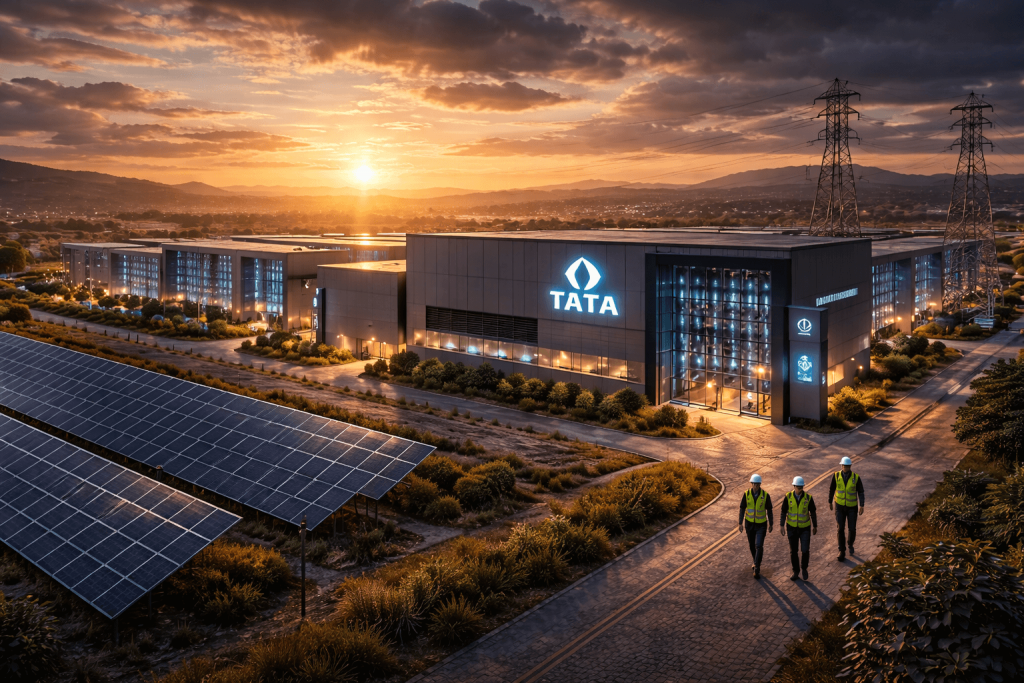
OpenAI has secured 100 megawatts (MW) of AI data center capacity from Tata Group in India, with plans to scale that footprint to as much as 1 gigawatt (GW) over time, according to TechCrunch.
The agreement marks one of OpenAI’s most significant infrastructure moves outside the United States. It also signals India’s growing importance in the global AI compute race, as model training and inference demands continue to surge.
What Happened?
OpenAI has partnered with Tata to obtain 100MW of data center capacity in India.
The deal provides OpenAI with access to:
- High-performance computing infrastructure
- AI-ready data center facilities
- Power capacity suitable for GPU-heavy workloads
The company is reportedly exploring expansion toward 1GW — a scale typically associated with hyperscale cloud providers and major AI labs.
Neither company disclosed financial terms.
Why 100MW Matters
AI model training and inference require enormous energy and computing capacity.
To put the scale into perspective:
- A 100MW data center can support tens of thousands of advanced GPUs.
- A 1GW footprint would place OpenAI among the largest global AI infrastructure operators.
Compute is now one of the biggest bottlenecks in AI development. Securing reliable, large-scale power capacity is critical for:
- Training next-generation models
- Serving enterprise customers
- Running multimodal AI systems
- Supporting global API demand
The Tata partnership gives OpenAI a foothold in a fast-growing technology market with expanding infrastructure capabilities.
Why India?
India offers several strategic advantages for AI infrastructure expansion:
1. Growing Data Center Ecosystem
India has been rapidly expanding its data center capacity, supported by government initiatives and private investment.
2. Competitive Operating Costs
Energy and operational costs can be more competitive than in some Western markets, depending on region and sourcing.
3. Expanding Digital Economy
India’s digital services sector is large and growing, creating local demand for AI services.
4. Strategic Diversification
Expanding outside the U.S. reduces geographic concentration risk and strengthens global resilience.
The Bigger Picture: AI Infrastructure Arms Race
OpenAI’s move comes amid escalating global investment in AI infrastructure.
Major players are racing to secure:
- GPU supply
- Power agreements
- Long-term data center contracts
- Semiconductor partnerships
The infrastructure layer has become just as competitive as model development itself.
As AI models grow more complex, infrastructure commitments are measured not just in millions — but in gigawatts.
What’s Next?
Several key developments to monitor:
- Whether OpenAI confirms a timeline toward 1GW
- Additional partnerships with energy providers
- Regulatory and environmental considerations
- Expansion of local AI services tied to this infrastructure
Scaling to 1GW would require significant long-term investment and coordination with energy grids.
Conclusion: AI’s Power Demand Keeps Rising
OpenAI’s 100MW agreement with Tata highlights a defining trend in the AI industry: compute capacity is becoming strategic infrastructure.
As companies push toward larger and more capable models, the competition for power, space, and GPUs is intensifying.
India’s inclusion in OpenAI’s infrastructure roadmap signals its growing role in the global AI ecosystem.
The next phase of AI competition may not be decided only by algorithms — but by who controls the most compute.
Key Takeaways
- OpenAI secured 100MW of AI data center capacity from Tata in India.
- The company is reportedly exploring expansion to 1GW.
- Large-scale computers are critical for training and running advanced AI models.
- The move reflects India’s rising role in global AI infrastructure.
- Infrastructure competition is becoming central to the AI race.